
Pensions and Inheritance Tax: What’s Changing and What Can You Do About It?
For many years, pensions have been one of the most effective vehicles for both retirement planning and passing wealth to future generations. However, proposed changes coming into effect from 6 April 2027 could significantly alter the inheritance tax landscape for thousands of families.
More Families Expected to Pay Inheritance Tax
Currently, around 38,500 estates pay Inheritance Tax (IHT) each year. HMRC estimates that this figure could rise to approximately 49,000 estates from April 2027, representing an increase of over 10,500 estates, or 27%. In addition, around 213,000 estates are estimated to contain pension wealth that may be affected by the forthcoming changes. (HMRC.GOV.UK)
The “Double Tax” Problem
From 6 April 2027, most unused pension funds are expected to be included within an individual’s estate for IHT purposes. This means that when pension benefits are inherited by anyone other than a spouse, civil partner or charity, the pension fund could be subject to Inheritance Tax at 40%.
The situation can become even more challenging where the pension holder dies after age 75. In these circumstances, beneficiaries may also be liable for Income Tax when drawing money from the inherited pension fund.
The combined impact can be significant:
- Basic-rate taxpayers could lose up to 52% of the inherited pension value to tax.
- Higher-rate taxpayers could lose up to 64%.
- Additional-rate taxpayers could lose up to 67%. This has led many commentators to describe the changes as a form of “double taxation”.
Don’t Let Tax Drive Every Decision
Despite these potentially high tax rates, it is important not to let tax considerations override retirement objectives. The primary purpose of a pension remains providing an income throughout retirement.
Rather than focusing solely on reducing tax, families should seek to balance:
- Maintaining lifestyle and retirement income.
- Preserving flexibility.
- Passing wealth efficiently to future generations.
- Protecting against unnecessary tax leakage.
This is where proactive planning can add considerable value.
Six Ways to Reduce a Future Inheritance Tax Liability
- Engage
Work with a Financial Planner to understand your objectives, family circumstances and long-term aspirations.
- Plan
Make full use of available allowances, exemptions and reliefs, including the Residence Nil Rate Band where available. No IHT on transfer to a Spouse – consider marriage (obviously for the right reasons). Ensure Nominations and Wills are updated to consider the new rules. Aged over 75? Do you have non or lower tax paying beneficiaries (Children or Grandchildren) to leave funds to?
- Spend
Enjoy the wealth you have worked hard to build. Many clients are encouraged to “SKI” (Spend the Kids’ Inheritance) responsibly by using assets to enhance their own lifestyle.
- Gift
Consider gifting strategies, including gifts from surplus income and contributions to children’s and grandchildren’s pensions. Cashflow modelling can help determine what is affordable.
- Invest
Certain tax-efficient investments, including Business Relief qualifying investments, may help reduce a future IHT liability. Due to the high Gilt Yields, Annuities are now paying higher levels of income. Consider part annuity to generate income to either gift or fund payments for Life Cover to pay the IHT
- Insure
Life assurance can provide funds specifically designed to meet an anticipated inheritance tax liability and preserve more wealth for beneficiaries. Would need to be written under Trust so does not form part of your estate value.
Worked Example: Can Planning Improve the Outcome?
Consider the following family:
- Married couple
- Both aged 60
- Good health
- Three adult children
- Total estate value of £2.25 million
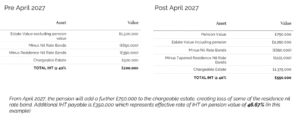
Scenario 1: No Planning
If the couple take no action, the projected inheritance tax bill from April 2027 increases to £550,000 an increase of £350,000
Amount Remaining for Family: £1,700,000 Each Child £566,666 (HMRC £550,000)
Scenario 2: Using an Annuity and Whole-of-Life Insurance Strategy
One potential planning solution combines:
- Converting a portion of assets into a guaranteed annuity income. This will reduce the estate value and reclaim some of the Residence Nil Rate Band.
- Using that income to fund a whole-of-life insurance policy written appropriately for estate planning purposes.
Guaranteed Whole of Life Insurance Policy

How Can This Be Funded?

Summary Calculation

In the example provided:
- Cost of implementing strategy: £195,000 to purchase a Joint Life Annuity to generate extra income. We have assumed that they are 40% tax payers throughout life.
- Insurance cover provided: £550,000 from day one
- Estate value is also reduced by the amount used to implement the strategy. The resulting outcome is:
Amount Remaining for Family: £2,171,746 Each Child receives £723,391 (HMRC £432,619)
The effective reduction in estate value required to achieve this improved result is approximately £78,254, while each child receives significantly more inheritance.
The Bottom Line
The proposed pension inheritance tax changes make estate planning more important than ever for affluent families. While pensions will continue to play a vital role in retirement income planning, many individuals may benefit from reviewing how their wider estate is structured before the new rules come into effect.
The good news is that there are a number of established planning techniques available. Whether through gifting, spending strategies, tax-efficient investments or insurance-based solutions, taking advice early can help ensure more of your wealth reaches the people you care about rather than being lost to unnecessary taxation.
If you would like to understand how these changes could affect your family, please contact me about reviewing your estate planning strategy.
|
||
|
||
|